 Private tripClassic route4N / 5D

Darjeeling & Kalimpong Experience
- Kalimpong 2N · Darjeeling 1N · Siliguri 1N
- Your dates · private car
₹18,900pp · ₹37,800 for 2
The Queen of Hills
From₹13,500per person
Every trip shows its route, nights and price before you message us
Private tripClassic route4N / 5D₹18,900pp · ₹37,800 for 2
Private tripClassic route4N / 5D
₹19,320pp · ₹38,640 for 2
Private tripClassic route6N / 7D₹29,400pp · ₹58,800 for 2
 Private tripWildlife5N / 6D

₹32,000pp · ₹64,000 for 2
Your own Darjeeling route
We plan it for you
Tell us the days and who's coming; we send a written plan and price.
Private trip prices are per person for 2. Group trip prices are per seat on fixed dates.
| Trip | Type | Length | For 2 | For 4 | For 6 |
|---|---|---|---|---|---|
| Darjeeling & Kalimpong Experience | Private | 4N / 5D | ₹18,900 | ₹15,900 | ₹14,000 |
| Darjeeling & Sikkim Highlights | Private | 4N / 5D | ₹19,320 | ₹17,100 | ₹13,500 |
| Sikkim & Darjeeling Grand Experience | Private | 6N / 7D | ₹29,400 | ₹24,450 | ₹19,900 |
| Darjeeling Hills & Dooars Jungle | Private | 5N / 6D | ₹32,000 | ₹26,000 | ₹21,000 |
Per person for private trips. Private prices include your stays, daily breakfast, your own car and driver, fuel, tolls and parking; entry fees and other meals are extra.
Best Good Avoid
Darjeeling is best in spring and autumn when the skies are clearest and Kanchenjunga is most visible. The first flush tea harvest in March–April is a particularly special time to visit.
Spring · March – May (best)
First flush tea harvest is underway, the most prized in the world. Cherry blossoms in bloom. Clear morning views of Kanchenjunga. Warm days, cool nights.
Autumn · October – November (best)
Post-monsoon clarity. The second flush tea gives way to autumnal harvest. Kanchenjunga crisp and visible. Pleasant temperatures throughout.
Winter · December – February (good)
Cold, sometimes frosty. Snow occasionally dusts the higher ridges. Far fewer tourists. The town has an intimate, local feeling that's harder to find in peak season.
Monsoon · June – September (avoid)
Heavy rain, thick clouds, and landslide risk on mountain roads. Views are almost entirely gone. The tea gardens are lush and green, but not recommended for most travelers.
01
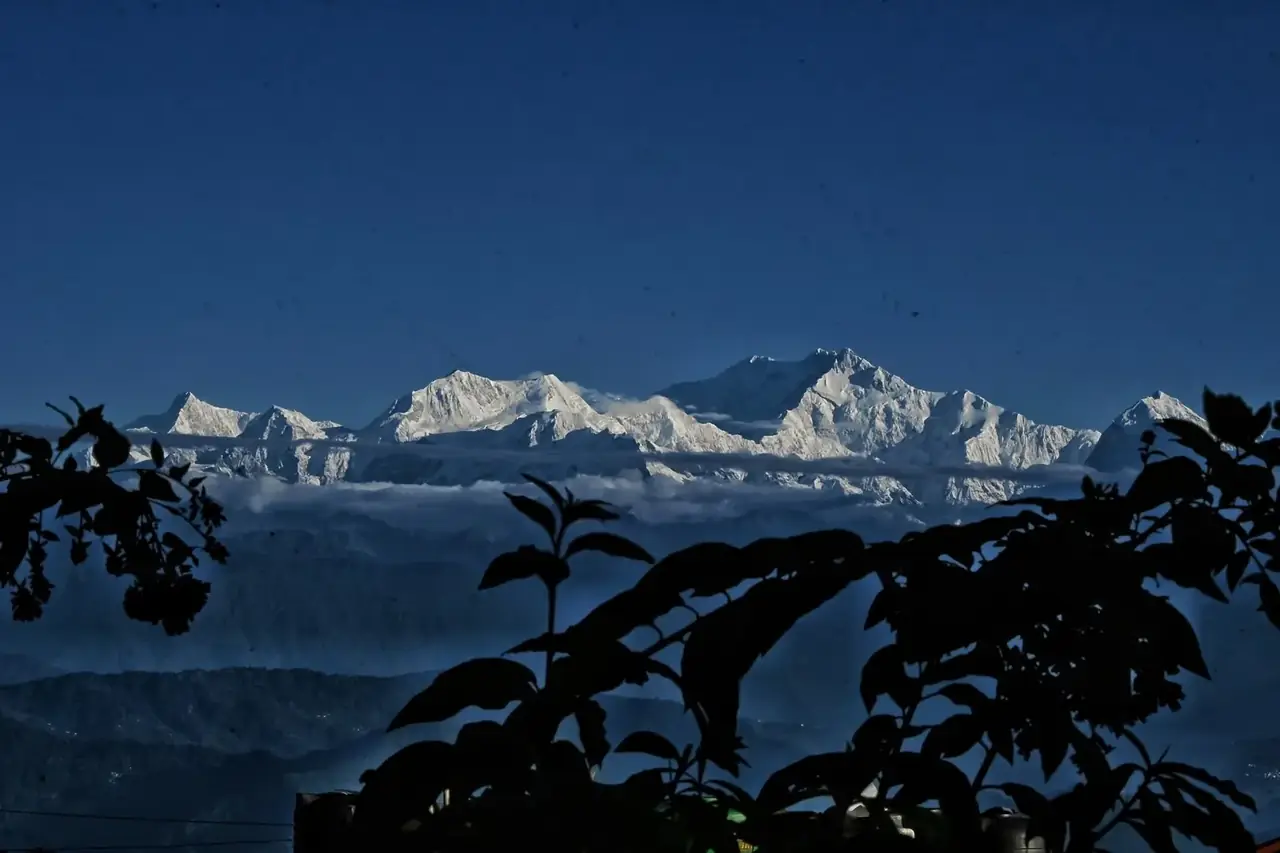
Wake at 4am and drive to Tiger Hill for the most celebrated sunrise in India. Kanchenjunga fills the skyline. On the clearest winter mornings, Makalu and Everest are visible further west, a row of peaks lit gold above the cloud layer.
02
Walk through Makaibari, the world's first commercial tea estate, with a third-generation tea taster. Learn how altitude, humidity, and a single degree of temperature change the character of a cup.
03
The Darjeeling Himalayan Railway is a UNESCO World Heritage Site. Ride it not for transport but for the experience of moving slowly through the hills the way travellers did in 1881.
04
Bhutia Busty Monastery with Kanchenjunga as its backdrop. Ghoom Monastery, the highest railway station in India. We visit at quiet hours, away from tour groups.
05
Chowk Bazaar in the early morning is where Darjeeling actually happens: farmers, monks, schoolchildren, traders. A bowl of thukpa noodles and an hour here is worth more than any museum.
06
Dinner with a local family in their home. Sel roti, gundruk, momos, and dal bhat cooked on a wood fire at 2,000 metres. The sel roti comes off the pan in a ring and the host insists you eat it hot. You will.
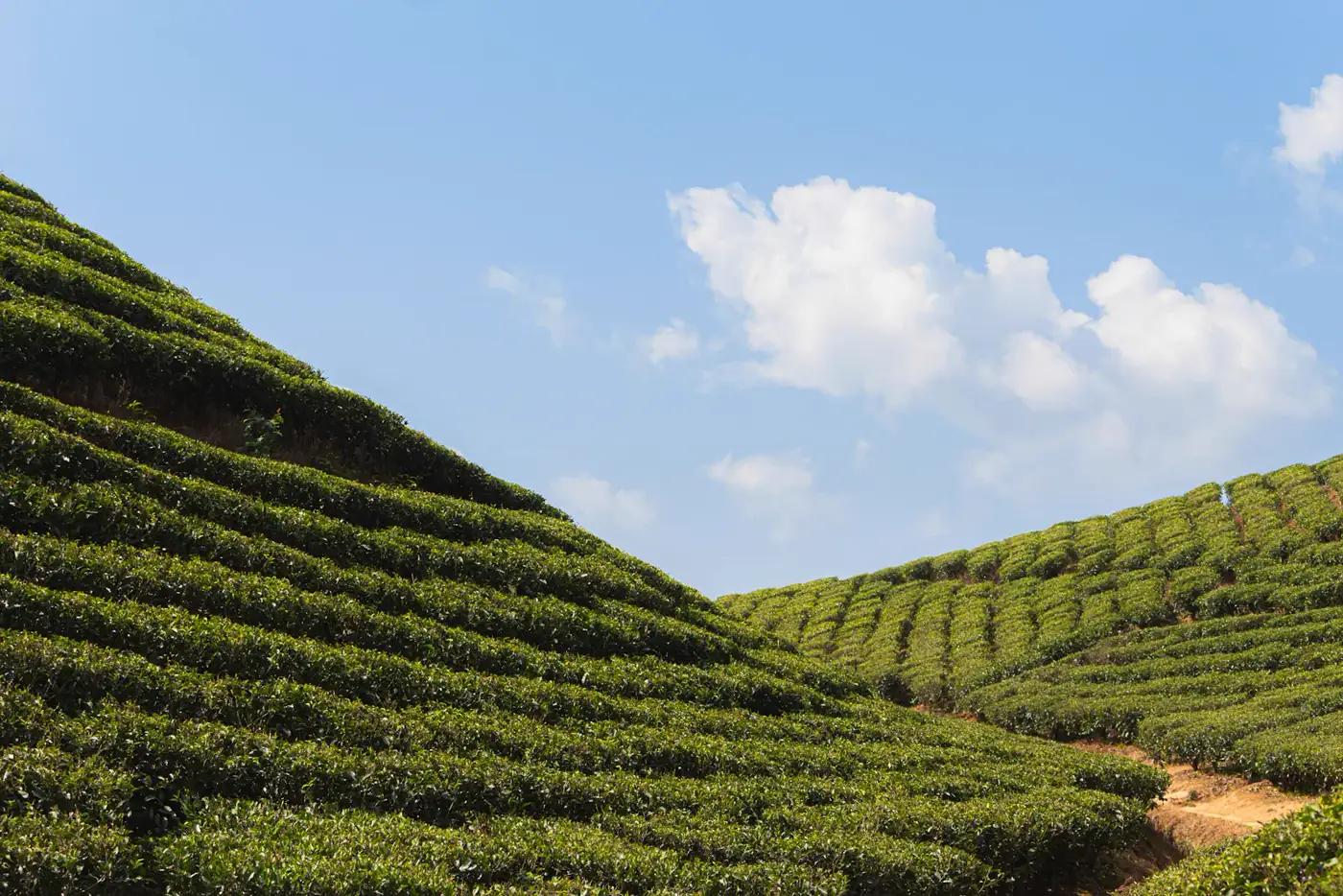
Darjeeling sits at 2,042 metres on a ridge in the Himalayan foothills of West Bengal, surrounded by tea gardens that produce some of the most prized tea on earth. On clear mornings, Kanchenjunga appears above the clouds, a sight that stops conversation entirely.
The British built Darjeeling as a sanatorium and hill retreat. They left behind a legacy of stone bungalows, gothic churches, and the Toy Train, a narrow-gauge railway that winds through the hills and is now a UNESCO World Heritage Site.
But the soul of Darjeeling is Nepali, Tibetan, and Lepcha, a layered cultural mix that expresses itself in monasteries, festivals, street food, and the easy warmth of its people. Walk down Mall Road on a foggy evening: a Presbyterian church on one side, a Buddhist monastery a hundred metres up, the smell of momo steam from a cart below.
We come here for the tea, the light, the morning silence, and the slow rhythm of hill life that the city has somehow managed to keep.
October to December and March to May are the best months for a Darjeeling trip. The post-monsoon autumn delivers the clearest Kanchenjunga sunrises from Tiger Hill, while spring brings the first flush tea harvest and mild, blossom-filled days. The monsoon from June to September is lush but prone to landslides and obscured mountain views. Winter mornings are cold but offer crisp visibility and far fewer crowds.
Two to three nights is ideal for Darjeeling itself, covering the Tiger Hill sunrise, Batasia Loop, Ghoom Monastery, the Himalayan Railway toy train, and a working tea garden. Many travellers combine Darjeeling with Sikkim or the Dooars to make a richer week-long Eastern Himalayan journey, since they connect easily through Bagdogra Airport and NJP railway station.
No. Indian nationals do not need any permit for Darjeeling or its standard sightseeing, including Tiger Hill, Ghoom, Batasia Loop, and the tea estates. It is one of the most accessible hill destinations in the Eastern Himalayas. If you extend into Sikkim, a Protected Area Permit is needed for Tsomgo Lake and Nathula, which ClearEast Trip arranges for you.
Yes. A guided walk through a working Darjeeling tea estate, learning how the famous muscatel first and second flush teas are plucked and processed, is one of the highlights we build into every journey. Several heritage tea bungalows offer overnight stays among the slopes, which we can arrange on request for travellers who want to wake up inside the gardens themselves.
A Darjeeling journey is priced per person and depends on your group size, season, and how many nights you stay. Our pricing covers accommodation, daily breakfast, all transfers from Bagdogra or NJP, sightseeing, and an experienced local driver. Per-head costs drop as more people share the car: a group of six pays less per head than a couple. Send us your dates on WhatsApp for a transparent, all-in quote.
Reviews on Google · Read them all →
★★★★★
“Spoke with ClearEast trip team. It was just wow, they are best if anyone planning for bhutan or northeast trip. They don't try to sale. They have guide me step by step and made me understand the complete process for bhutan trip. They hear me out…”
suraj s · Bhutan trip · Google review, Nov 2025
★★★★★
“I booked my Sikkim trip with Cleareast Trip, and it was one of the best travel experiences I’ve ever had! The entire tour was perfectly planned — right from Gangtok to Tsomgo Lake and Nathula Pass. The hotels were clean and comfortable.”
Soniya Mangar · Sikkim trip · Google review, Aug 2025
★★★★★
“I recently booked trip through this travel company and everything was perfectly organised from start to finish. The team was helpful responsive and genuinely cared about making our journey smooth and memorable. Hotels transportation and everything…”
Dipankar Deka · Google review, Aug 2025
Most trips start with a ten-minute chat. Tell us where, when and who's coming, and we reply within a few hours.