Destination
Sikkim
North Sikkim and the Old Silk Route
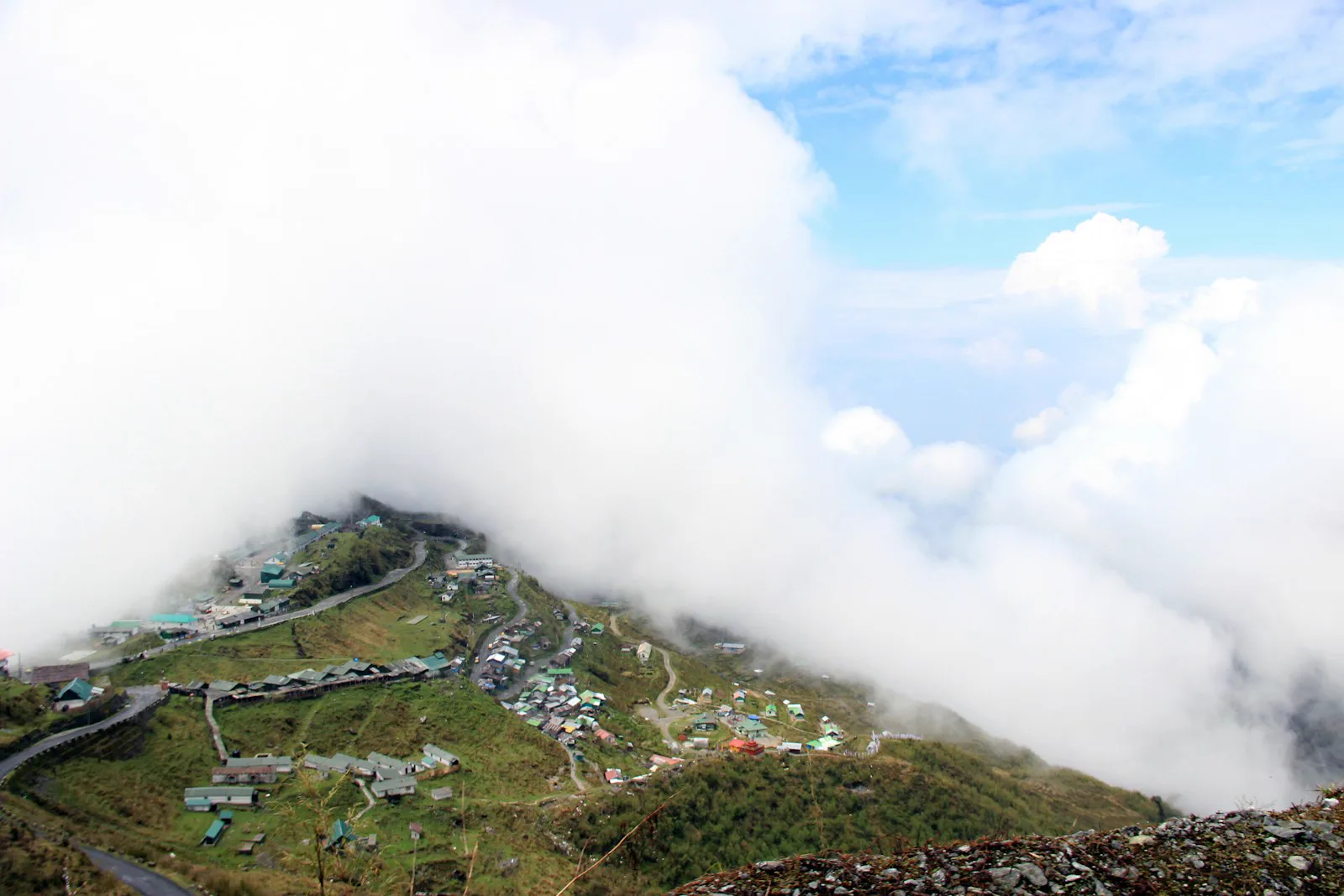
Most people think they know Sikkim. They think Gangtok, monasteries, maybe Tsomgo Lake on a day trip. North Sikkim is something else entirely. At 17,800 feet, Gurudongmar Lake sits near the Tibetan border, one of the highest lakes on earth, sacred to Buddhists and Hindus alike, completely still, almost impossibly blue. This is where our journeys go.
The road to Lachen takes six hours from Gangtok. It is not a comfortable drive. It is, however, one of the most arresting drives in India: the Teesta gorge falling away below, the road clinging to rock faces, the air thinning as you climb. By the time you arrive in Lachen, a Buddhist hamlet at 9,000 feet, the valley has narrowed to something you didn't know valleys could be.
Yumthang Valley opens the opposite direction, from Lachung, a morning drive up to 11,800 feet where the valley floor is flat and green and in March and April covered entirely in rhododendrons. Beyond it, Zero Point at 15,300 feet is where the road ends and Tibet begins. These are not metaphors. You stand there and the world literally stops.
East Sikkim holds one more thing most people miss: the Old Silk Route through Zuluk. Thirty-two hairpin bends on a road built for the ancient trade route between Tibet and Bengal. At dawn, from Thambi Viewpoint, you watch the mist clear over the Kanchenjunga range in silence. It is one of the best mornings we offer, anywhere.
Highlights
- —Gurudongmar Lake at 17,800 ft, one of the world's highest lakes
- —Yumthang Valley of Flowers, rhododendrons in spring
- —Zero Point (Yumesamdong), 15,300 ft, the end of India
- —Zuluk Old Silk Route, 32 hairpin bends, Kanchenjunga sunrise
- —Lachen and Lachung village stays, traditional Buddhist hamlets
- —Nathula Pass, Indo-China border at 14,140 ft
Quick Facts
- Capital
- Gangtok
- Best For
- High-altitude lakes, valleys, Silk Route
- Altitude
- 5,500 ft – 17,800 ft (on our journeys)
- Language
- Nepali, Sikkimese, English
- Entry
- Inner Line Permit required, we handle it
- From Delhi
- ~2h flight to Bagdogra + 4h drive
North Sikkim has two clear travel windows. Spring (March–May) for Yumthang's rhododendrons and Gurudongmar's frozen clarity. Autumn (October–November) for crisp mountain views and uncrowded roads. Both are excellent. The Silk Route is beautiful in both seasons.
Spring
March – May
The rhododendron bloom in Yumthang peaks in April. The entire valley floor turns red and pink. Gurudongmar Lake is still partially frozen in March, fully accessible by April. The clearest mountain views before the pre-monsoon haze arrives.
Autumn
October – November
Post-monsoon clarity. Kanchenjunga is visible almost every morning. The air is sharp and cold. Gurudongmar is deep blue, the surrounding peaks dusted in snow. The Zuluk Silk Route is at its most vivid. Our preferred season.
Winter
December – February
Heavy snowfall closes Gurudongmar and Zero Point. The Silk Route through Zuluk remains accessible and is remarkably uncrowded. Good for those who want North Sikkim without the permits and altitude, but limited in scope.
Monsoon
June – September
Landslides are frequent and roads to North Sikkim close regularly. Gurudongmar is inaccessible. The Silk Route becomes dangerous. We do not operate North Sikkim journeys during this period.
Experiences
Gurudongmar Lake at Dawn
Leave Lachen at 4am. The drive to 17,800 feet takes two hours in a shared jeep, the road barely wide enough, the stars still out when you start. The lake appears suddenly, flat, enormous, perfectly still. Sacred to Sikhs, Buddhists, and Hindus. One of those places that makes you stop talking.
Yumthang Valley of Flowers
From Lachung, a morning drive up to 11,800 feet. In spring, the valley floor is a continuous sheet of rhododendrons. Over 24 species bloom here. In autumn, it's a different kind of beautiful: golden light, empty meadows, yaks grazing in silence.
Zero Point: Where India Ends
Yumesamdong, at 15,300 feet, is the last point before the Tibetan border. The drive from Yumthang is itself memorable: glaciers on either side, the road narrowing to a track. At Zero Point: snow, silence, and the sense that you've reached an edge.
The Old Silk Route Through Zuluk
Thirty-two hairpin bends on a road that once connected Tibet with Bengal. The Zuluk circuit takes you through forest, mist, and altitude, to Thambi Viewpoint where, on clear mornings, the entire Kanchenjunga range appears at once. The scale of what you see from a road most people have never heard of is hard to account for.
Lachen and Lachung Village Life
These are real Buddhist hamlets, not tourist villages. The guesthouses are family-run. Evenings are spent around a wood stove while the temperature outside drops below freezing. The people here have been living at this altitude for generations, and it shows in how they move, what they eat, what they find funny.
Nathula Pass
The Indo-China border at 14,140 feet, one of the highest motorable passes on the old Silk Route. Indian and Chinese soldiers stand a few metres apart. The history of this place, the 1962 war, the reopening for trade in 2006, is present in a way that most border crossings aren't.
North Sikkim: Lachen, Lachung and the Silk Route
Seven days across the full North Sikkim circuit. Gurudongmar Lake at 17,800 feet. Yumthang Valley in rhododendron season. Zero Point. The Old Silk Route through Zuluk. This is not a comfortable journey: the roads are rough, the altitude is real, and the distances are long. It earns every hour of discomfort. We handle all Inner Line Permits.
Day by Day
Bagdogra to Gangtok
Arrive at Bagdogra airport. Drive four hours through the Teesta valley. The road climbs steadily, the river appears and disappears below. Arrive in Gangtok by evening. Permit formalities arranged by the team. Rest. Acclimatise.
- ·Pickup from Bagdogra airport
- ·Scenic drive through Teesta gorge
- ·Hotel check-in in Gangtok
- ·Inner Line Permit processing
- ·Evening walk on MG Marg
Gangtok to Lachen
An early start for the six-hour drive to Lachen at 9,000 feet. The road follows the Teesta and then the Lachung Chu river deep into the mountains. The valley narrows. The air changes. Arrive by afternoon, rest, and let the altitude settle.
- ·Early morning departure from Gangtok
- ·Drive through Chungthang junction
- ·Arrival in Lachen village
- ·Rest and acclimatisation
- ·Evening with host family at the guesthouse
Gurudongmar Lake at 17,800 Feet
Leave at 4am. The drive to Gurudongmar takes two hours on roads that are barely roads. The lake appears without warning, flat, impossibly blue, surrounded by peaks. Sacred to multiple faiths. Spend an hour here before heading back to Lachung for the night.
- ·4am departure from Lachen
- ·Arrive at Gurudongmar Lake (17,800 ft)
- ·Time at the lake: walking the shore, taking it in
- ·Drive to Lachung (4-5h)
- ·Rest at Lachung guesthouse
Yumthang Valley and Zero Point
Morning drive from Lachung up to Yumthang Valley at 11,800 feet, the Valley of Flowers. Rhododendrons in spring, golden light in autumn. Continue further to Zero Point at 15,300 feet, where the road ends at the Tibetan border. Return to Lachung by evening.
- ·Morning drive to Yumthang Valley
- ·Walk through the rhododendron meadows
- ·Continue to Zero Point (15,300 ft)
- ·Packed lunch at altitude
- ·Return to Lachung for overnight
Lachung to Gangtok
The long drive back to Gangtok, retracing the route through the gorge. Arrive by early afternoon. Time to explore Gangtok at your own pace. The old monastery at Rumtek is 30 minutes away if you have the energy.
- ·Morning departure from Lachung
- ·Return drive through North Sikkim
- ·Arrival in Gangtok
- ·Optional visit to Rumtek Monastery
- ·Dinner in Gangtok, rest before the Silk Route
The Old Silk Route: Gangtok to Zuluk
Drive east into the Silk Route circuit. The road climbs through forest and mist via Rongli and Padamchen to Zuluk at 10,000 feet, a tiny village of a few dozen houses perched on a ridge above the 32 hairpin bends. Arrive by afternoon. The sunset from here is something else.
- ·Drive east from Gangtok to Silk Route
- ·Ascent through 32 hairpin bends to Zuluk
- ·Check in at Zuluk homestay
- ·Evening walk on the ridge
- ·Sunset over the Kanchenjunga range
Thambi Viewpoint Sunrise: Departure
Up at 5am for the short walk to Thambi Viewpoint. On clear mornings Kangchenjunga dominates the horizon, close enough to see the glaciers. On the best days, the more distant peaks of the Everest massif appear behind it. Back to Zuluk for breakfast, then descend and drive to Bagdogra. The journey ends here.
- ·5am walk to Thambi Viewpoint
- ·Kanchenjunga range sunrise
- ·Breakfast at Zuluk
- ·Descent and drive to Bagdogra
- ·Departure from Bagdogra airport
7 Days / 6 Nights
₹19,000 – ₹33,900 per person
4–8 people
March–May, October–November
What's Included
- ✓Accommodation (6 nights, guesthouses and homestays)
- ✓All meals throughout the journey
- ✓Dedicated local guide for the full 7 days
- ✓All transportation in shared 4WD vehicles
- ✓Inner Line Permits for all restricted zones
- ✓All entrance fees and experience costs
No commitment. We'll answer your questions first.
Google Reviews
What Travellers Write
7 reviews on Google
suraj s
8 months ago
Spoke with ClearEast trip team. It was just wow, they are best if anyone planning for bhutan or northeast trip. They don't try to sale. They have guide me step by step and made me understand the complete process for bhut…
Nibedita Basumatary
6 months ago
Had the best trip ever all possible because of you 🫶❤️
Soniya Mangar
11 months ago
I booked my Sikkim trip with Cleareast Trip, and it was one of the best travel experiences I’ve ever had! The entire tour was perfectly planned — right from Gangtok to Tsomgo Lake and Nathula Pass. The hotels were clean…
Dipankar Deka
11 months ago
I recently booked trip through this travel company and everything was perfectly organised from start to finish. The team was helpful responsive and genuinely cared about making our journey smooth and memorable. Hotels tr…
Abhishek Hugar
10 months ago
Great experience with cleareast trip. Thank you for all your support to for this. Love it and definitely going suggests friends and family.
Yash Sagar
11 months ago
Good service.
Common Questions
Planning a Sikkim Trip
What is the best time to visit North Sikkim?
October to mid-December and March to May are the two ideal windows for a North Sikkim trip. Post-monsoon skies are clear, the road to Gurudongmar Lake is reliably open, and Kanchenjunga views are at their sharpest. Spring brings the Yumthang Valley of Flowers alive with rhododendrons. Avoid the monsoon months of June to September, when landslides regularly block the high-altitude roads to Lachen and Lachung.
How many days do I need for a Sikkim trip?
For Gangtok and Tsomgo Lake alone, three nights is the comfortable minimum. To reach North Sikkim properly, including Lachen, Lachung, Gurudongmar Lake, and Yumthang Valley, plan for five to seven nights. The high-altitude drives are long and the body needs time to acclimatise above 10,000 feet, so we never rush this itinerary. A slower pace is also far safer at altitude.
Do I need a permit to visit North Sikkim?
Indian nationals do not need an Inner Line Permit for Gangtok, but a Protected Area Permit is required for Tsomgo Lake, Nathula Pass, and all of North Sikkim including Gurudongmar Lake. ClearEast Trip arranges every permit for you locally; you simply carry a valid government photo ID. Nathula Pass is closed on Mondays and Tuesdays, and permits everywhere are subject to weather and army clearance on the day.
How does a ClearEast Trip Sikkim journey work?
We travel in small groups of four to eight people, founder-led, with experienced local drivers who know these mountain roads intimately. We handle every permit, the hotel bookings, the early-morning logistics for Gurudongmar, and the acclimatisation pacing. You tell us your dates and group size on WhatsApp, we design the itinerary around you, and you arrive to find everything already arranged.
How much does a Sikkim trip cost per person?
A Sikkim journey is priced per person and depends on your group size, the season, and how far north you travel. Larger groups bring the per-head cost down significantly, and our pricing always includes accommodation, daily breakfast, all transfers, permits coordination, and sightseeing. For an exact quote on your dates, message us on WhatsApp and we will share a transparent, all-in figure with nothing hidden.
Keep exploring
More of the Eastern Himalayas
Most journeys begin with a
10-minute conversation.
Tell us where you want to go, when, and who is coming. We handle everything from there.
Start the Conversation →ClearEast Trip
Typically replies within a few hours