Darjeeling Tea: What You Actually Taste on a Tea Estate Visit
Beyond the marketing. What a morning in a working Darjeeling estate actually involves
Most people have drunk Darjeeling tea. Fewer people have visited a Darjeeling estate. The difference between what you imagine and what you find is significant. And better.
Most people have drunk Darjeeling tea. Fewer people have visited a Darjeeling estate. The difference between what you imagine and what you find is significant, and the reality is better than the marketing.
What an Estate Actually Is
Darjeeling's famous tea estates are not the vast, flat plantation sprawls of Assam. They are steep hillside gardens, often family-operated for three or four generations, where the terrain itself contributes to the flavour. The elevation, between 600 and 2,000 metres, creates the slow growth that produces the delicate, muscatel character Darjeeling tea is known for.
Walking through a working estate in the early morning (mist still in the bushes, dew on the leaves, the first pluckers moving through the rows) is one of those experiences that doesn't require any special knowledge to appreciate. The rows of tea bushes on a hillside, the mountains visible above the mist, the smell of fresh leaf in the air: these things work on you directly.
The Tasting
A proper estate tasting involves three or four teas at different elevation levels or flush points. First flush (March–April) teas are the most prized: lighter, floral, delicate. Second flush (May–June) produces the famous muscatel flavour: a grape-like richness that is unique to Darjeeling. Autumnal teas are fuller and more robust.
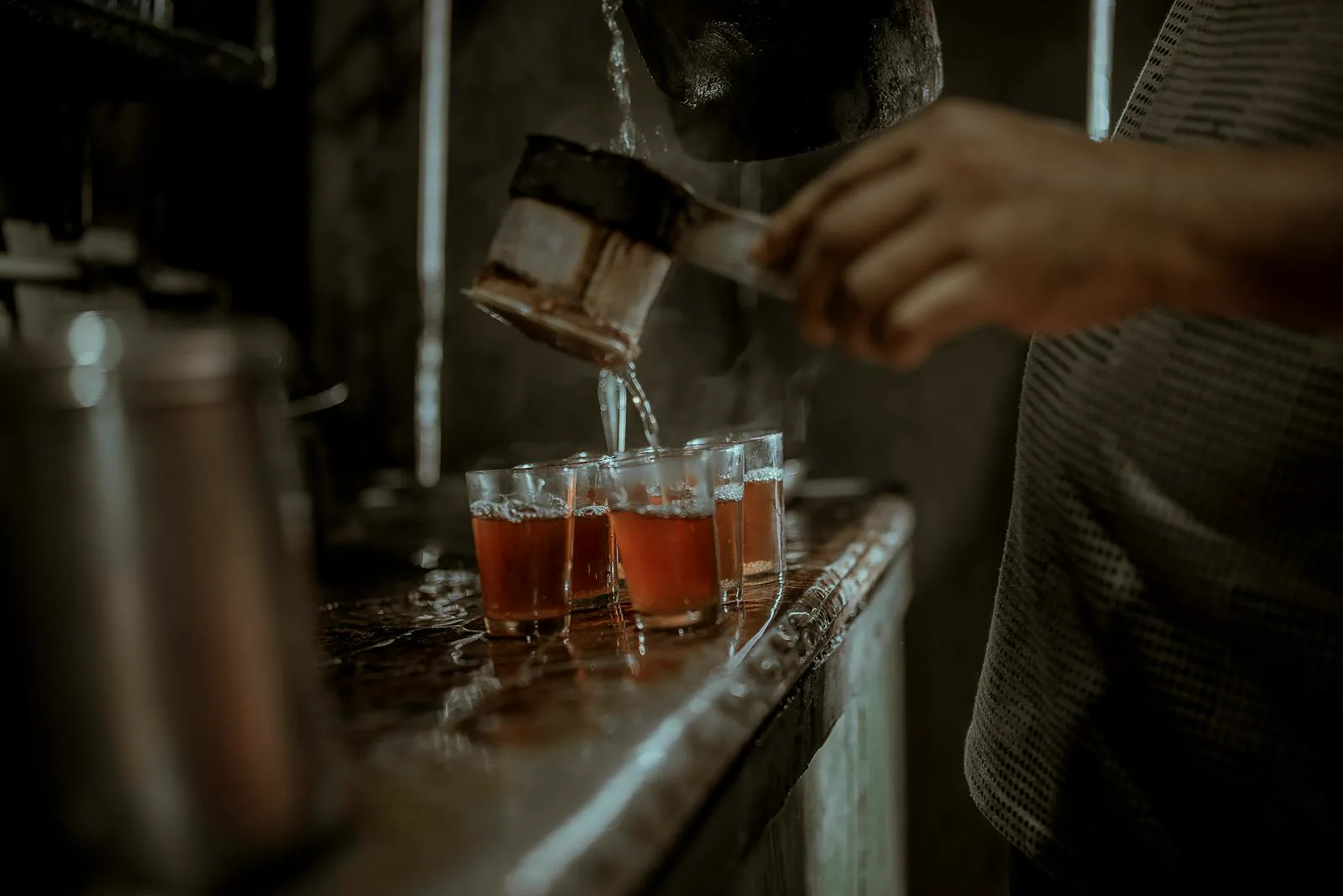
Tasting tea properly means drinking it without milk or sugar. This is not a hardship with good Darjeeling tea. The complexity is in the cup: floral notes, muscatel, sometimes a hint of almonds or apricots. You are not drinking breakfast tea. You are drinking something that took years of cultivation and craft to produce.
“I've been drinking Darjeeling tea my whole life. Tasting it on the estate where it was grown was like hearing a song I'd only ever heard through a wall.”
— ClearEast traveller, April 2024
Which Estate to Visit
Makaibari is the most storied: one of India's oldest continuously operating tea estates, founded in 1859, still run by the same family. The estate offers guided walks and tastings that go beyond marketing into craft education. Happy Valley Estate, just below Darjeeling town, is more accessible and offers a good introduction to the process. We use both, depending on the season and group.
Common Questions
What's the difference between first flush and second flush Darjeeling tea?
First flush (March-April) is the most prized: lighter, floral, delicate. Second flush (May-June) produces the famous muscatel flavour, a grape-like richness unique to Darjeeling. Autumnal teas, picked later in the year, are fuller and more robust.
Should Darjeeling tea be tasted with milk?
No, not for a proper estate tasting. The complexity, floral notes, muscatel, sometimes a hint of almonds or apricots, only comes through without milk or sugar.
Which Darjeeling tea estate should I visit?
Makaibari is the most storied, founded in 1859 and still run by the same family, with guided walks and tastings that go into real craft education. Happy Valley Estate, just below Darjeeling town, is more accessible and a good introduction to the process.
What elevation do Darjeeling tea estates grow at?
Between 600 and 2,000 metres. The steep hillside terrain and elevation create the slow growth that produces Darjeeling tea's delicate, muscatel character, unlike the flatter plantation sprawls of Assam.
Bookable journey
Darjeeling & Kalimpong Experience
4 Nights · 5 Days · from ₹14,000 per person
Travel here
Plan your Darjeeling journey
The Queen of Hills
Published
April 5, 2025
Most journeys begin with a
10-minute conversation.
Tell us where you want to go, when, and who is coming. We handle everything from there.
Start the Conversation →ClearEast Trip
Typically replies within a few hours