The Nongriat Trek: A Complete Guide to Meghalaya's Root Bridges
Everything you need to know before walking down 3,500 steps into the gorge
The double-decker root bridge at Nongriat takes about three hours to reach from Tyrna village. You walk down 3,500 steps into a gorge. The bridge is alive. The walk back up is harder.
The double-decker root bridge at Nongriat takes about three hours to reach from Tyrna village. You walk down approximately 3,500 steps (many of them uneven, slippery, or both) into a gorge through dense Khasi forest. The bridge waits at the bottom. The walk back up is harder than you think it will be.
What the Root Bridges Are
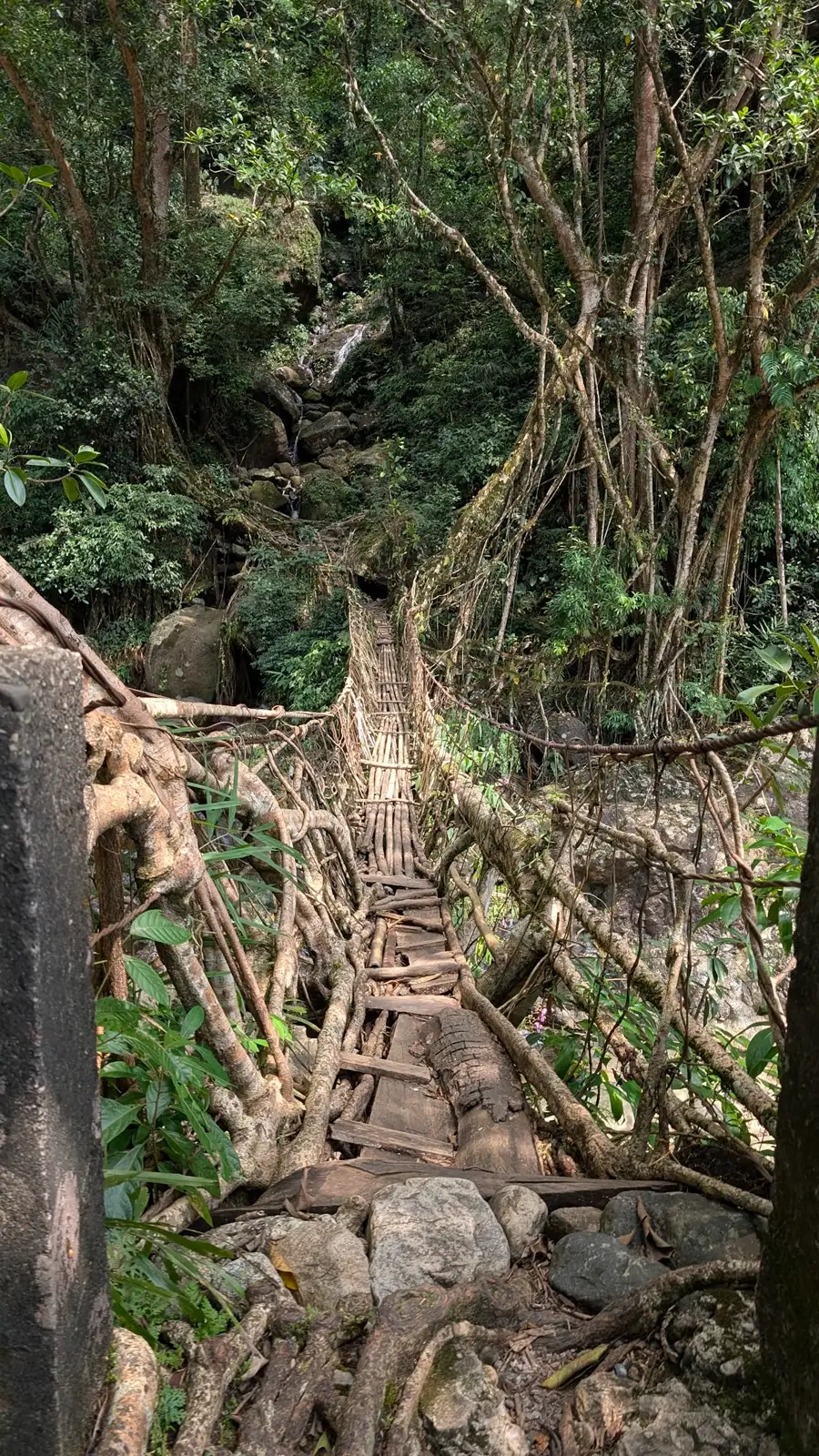
Living root bridges are unique to the Khasi Hills of Meghalaya. They are built by guiding the aerial roots of rubber trees across bamboo scaffolding over a period of 10–15 years. After the roots take hold, the bamboo is removed. The bridge grows stronger every year. The Nongriat double-decker is estimated to be between 200 and 400 years old, old enough that its origins predate living memory.
Walking across a living root bridge is different from walking across a wooden or stone bridge. The roots flex slightly underfoot. You can feel the structure breathing, almost. Below you: a clear mountain stream running over smooth boulders. The sound is constant and clean.
“The roots were alive under my feet. I kept thinking about that on the way home: something that has been growing for centuries, still growing.”
— ClearEast traveller, January 2025
The Trek: What to Know
Start from Tyrna village, about 12 kilometres from Cherrapunji. The trail descends approximately 730 metres over 3 kilometres. The steps are well-maintained but relentless. Allow 90 minutes for the descent. The double-decker bridge is reached after crossing a suspension bridge and ascending briefly from the valley floor.
Natural pool at the bottom: yes, it's real, and yes, you can swim. The water is cold and clear. Budget 30–45 minutes at the bridge itself. The ascent back to Tyrna takes 2–2.5 hours and requires steady pacing. Do not rush the first hour. The steepest sections are near the top.
When to Go
October and November are the ideal months. The monsoon has ended, the forest is intensely green, the stream is running high but safely, and the trail is not yet crowded with dry-season visitors. Avoid June–September entirely. The trail becomes dangerously slippery and flash flooding is a real risk.
Common Questions
How long does the Nongriat trek take?
About three hours down from Tyrna village to the double-decker bridge, roughly 3,500 steps descending 730 metres over 3 kilometres, then 2 to 2.5 hours back up. Allow 90 minutes for the descent alone and budget 30-45 minutes at the bridge.
How old are the living root bridges at Nongriat?
The double-decker bridge is estimated to be between 200 and 400 years old. Living root bridges are built by guiding the aerial roots of rubber trees across bamboo scaffolding over 10 to 15 years; once the roots take hold, the bamboo is removed and the bridge keeps getting stronger.
Can I swim at the bottom of the Nongriat trek?
Yes. There's a natural pool at the bridge with cold, clear water.
When is the best time for the Nongriat trek?
October and November, after the monsoon ends. The forest is intensely green, the stream runs high but safely, and the trail isn't yet crowded with dry-season visitors. Avoid June to September entirely, when the steps become dangerously slippery and flash flooding is a real risk.
Is the walk back up harder than the walk down?
Yes, noticeably. The ascent takes 2 to 2.5 hours and requires steady pacing, don't rush the first hour, since the steepest sections come near the top of the climb back to Tyrna.
Bookable journey
Complete Meghalaya
6 Nights · 7 Days · from ₹27,000 per person
Travel here
Plan your Meghalaya journey
Land of Clouds & Living Roots
Published
March 3, 2025
Most journeys begin with a
10-minute conversation.
Tell us where you want to go, when, and who is coming. We handle everything from there.
Start the Conversation →ClearEast Trip
Typically replies within a few hours