Why Slow Travel Changes You (And Fast Travel Doesn't)
On the difference between seeing a place and actually being in one
There's a moment that happens on almost every journey we run. Usually around day three. The traveller stops photographing everything and starts just looking.
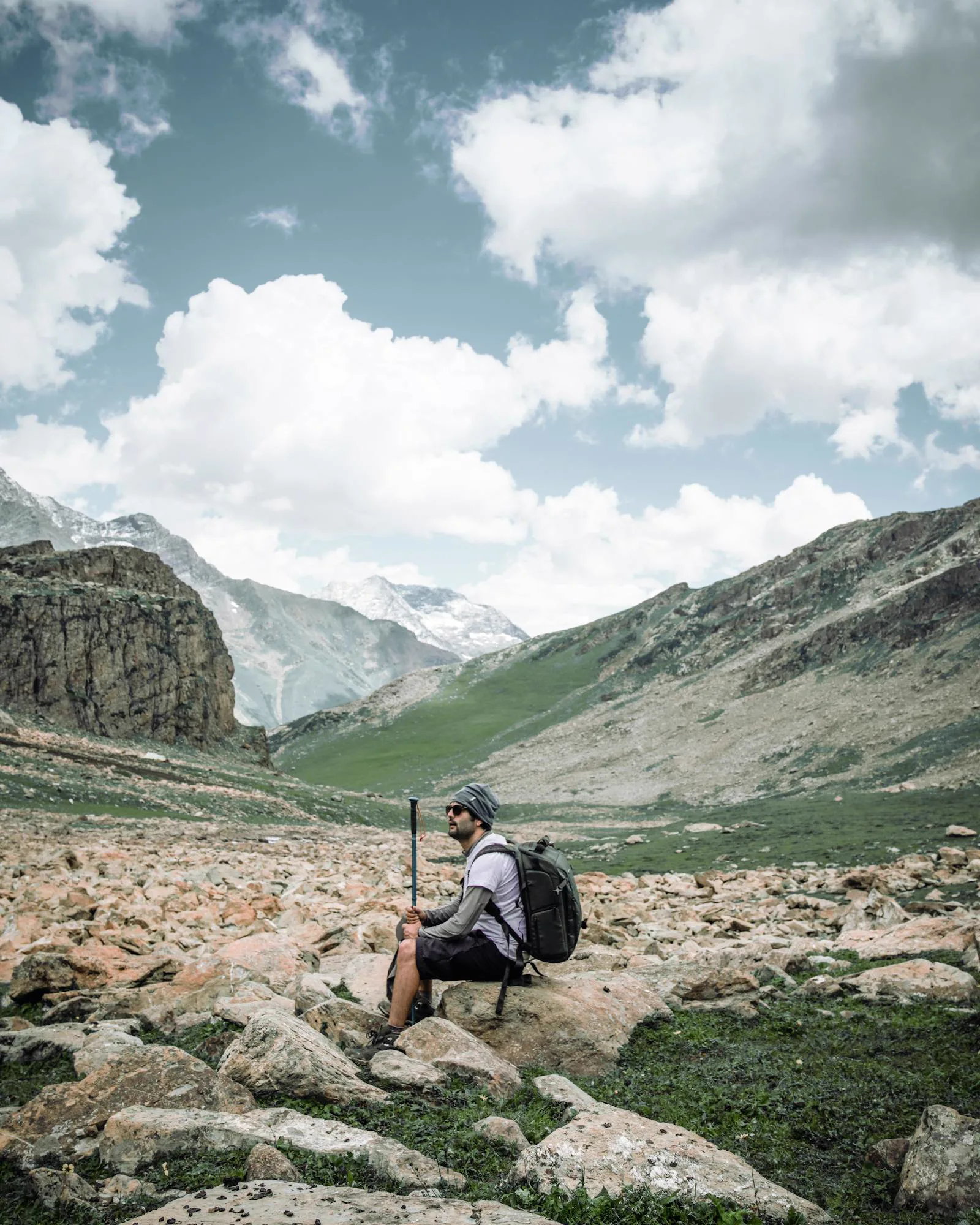
There's a moment that happens on almost every journey we run. Usually around day three. The traveller stops photographing everything and starts just looking. They put down the camera, or let their phone stay in their pocket, and they just sit with what's in front of them. It might be a monastery courtyard at dusk. Or the view from a tea garden ridge at 6am. Or a village family's kitchen where something is cooking on a wood fire and the smoke rises through a gap in the roof.
That moment, the one where the traveller arrives, is the whole point. And it almost never happens before day three. Which is why two-day trips don't work. Why a whirlwind Sikkim-Bhutan-Darjeeling circuit doesn't work. The body is in the mountains but the mind is still in the airport.
The Problem with Itinerary Tourism
Most travel itineraries are written as a list of nouns. Day 1: Tiger's Nest. Day 2: Punakha Dzong. Day 3: Thimphu. You arrive, you see the thing, you photograph the thing, you move to the next thing. You have technically been to Bhutan. But something is missing.
What's missing is time. Not more hours at Tiger's Nest. Time in the valley before the hike. Time eating breakfast at the guesthouse while rain touches the roof. Time talking to the monk who comes to sit with you for twenty minutes and doesn't have anywhere else to be. The itinerary doesn't account for these things because they can't be scheduled.
“The best moments of a journey are the ones that don't appear in the itinerary.”
— A ClearEast traveller, Bhutan, 2025
What Slow Travel Actually Means
Slow travel isn't about going fewer places. It's about going deeper into the places you go. It means staying long enough that the guesthouse owner stops treating you like a guest and starts treating you like a regular. It means eating the same local breakfast two mornings in a row because it was good. It means walking somewhere instead of driving, because the walk is where the real village is.
In the Eastern Himalayas, slow travel is almost enforced by the landscape. The roads wind. The altitude requires acclimatisation. The weather decides what happens next. You learn quickly that resistance is futile, and then something interesting happens: you stop resisting. You start to move at the pace of the place.
Why It Changes You
We hear this often from people who travel with us. They come back different. Not dramatically different, not in the way that travel brochures promise transformation. Quietly different. More patient. More willing to sit with uncertainty. More interested in their own neighbourhood when they get home, because they've practiced the skill of noticing.
That skill, noticing, is what slow travel teaches. When you're moving at speed, you're consuming. When you're moving slowly, you're observing. The difference is vast. One leaves you with photographs. The other leaves you with memories that don't require photographs to survive.
Common Questions
Why does slow travel take a few days to actually kick in?
It's a pattern we see on almost every trip: around day three, the traveller stops photographing everything and starts just looking. It rarely happens before then, which is why very short, whirlwind circuits don't deliver the same experience even when they cover the same places.
What's the difference between itinerary tourism and slow travel?
Itinerary tourism is a list of nouns, Day 1: Tiger's Nest, Day 2: Punakha Dzong, arrive, see, photograph, move on. Slow travel is going deeper into the places you already chose: staying long enough to be treated like a regular, eating the same good breakfast twice, walking instead of driving.
Why does the Eastern Himalayan landscape enforce a slower pace?
The roads wind, the altitude requires acclimatisation, and the weather decides what happens next. Resistance is genuinely futile, and once travellers stop resisting, they start moving at the pace of the place instead of their itinerary.
Published
March 12, 2025
Most journeys begin with a
10-minute conversation.
Tell us where you want to go, when, and who is coming. We handle everything from there.
Start the Conversation →ClearEast Trip
Typically replies within a few hours