Bhutan in October: Why This Is the Month to Go
The clearest skies of the year, the cranes returning to Phobjikha, and why the dates fill before you decide
Ask anyone who runs trips here and they will tell you the same thing: if you only go to Bhutan once, go in October. The haze of the monsoon has lifted, the Himalaya stands out sharp against a hard blue sky, and the valleys are still green before winter browns them.
Bhutan in October, at a glance
| Why October | Post-monsoon haze has cleared; October and November are the clearest months of the year for Himalayan views, and the peak season for trekking. |
|---|---|
| Cost for Indian nationals | Sustainable Development Fee of ₹1,200 per person per night. ₹600 for ages 6 to 11, free under 6. This rate is fixed until 31 August 2027. |
| Visa | Indian nationals do not need a visa. An entry permit is required, processed at Bhutan Immigration, and a passport or Voter ID (original, not a photocopy) is needed. |
| Tiger's Nest hike | Roughly 3 hours up to the monastery at 3,120 m. Reach the trailhead by 7:30am to walk in shade and ahead of the tour groups. |
| Getting there | Fly into Paro, or enter by land at Phuentsholing from Bagdogra/NJP in West Bengal. |
| Also in season | Black-necked cranes begin arriving in the Phobjikha valley from October. The crane festival at Gangtey Goempa falls on 11 November 2026. |
Ask anyone who runs trips here and they will tell you the same thing: if you only go to Bhutan once, go in October. The haze of the monsoon has lifted, the Himalaya stands out sharp against a hard blue sky, and the valleys are still green before winter browns them. It is the month the whole country seems to exhale. It is also the month the good dates disappear first, which is the part nobody warns you about until it is too late.
Why October, Specifically
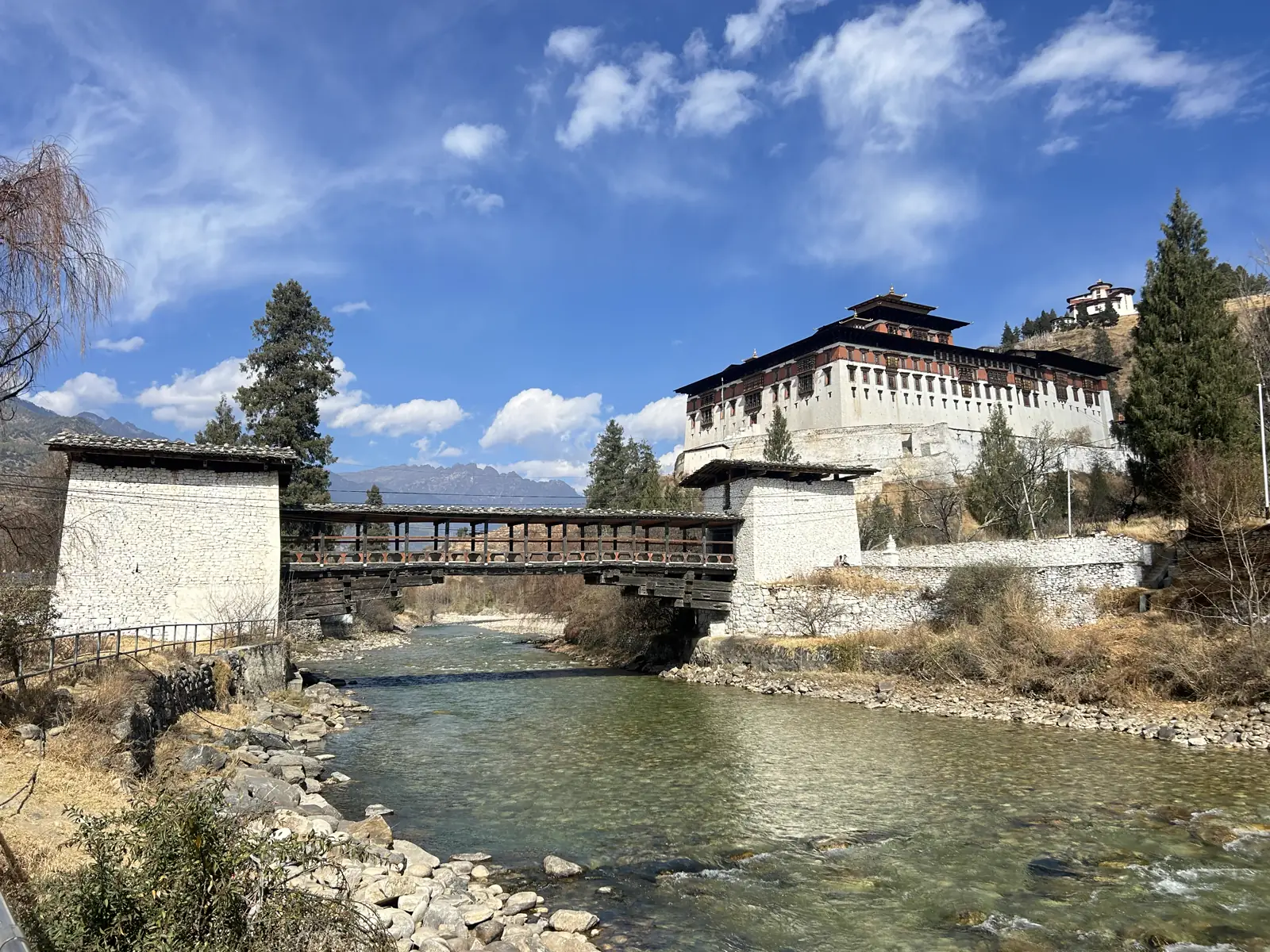
Bhutan has two windows that travel writing tends to lump together as 'peak season': October to November in autumn, and March to April in spring. They are not the same. Spring brings rhododendrons and softer light but also more unsettled weather rolling up from the plains. October is the dry, stable one. The monsoon clears by late September, and for a few weeks the air over the high passes is as clean as it gets all year. From the road up to Dochula Pass, on a clear October morning, you can see the eastern Himalayan peaks lined up across the horizon. In July that same viewpoint is a wall of cloud.
The other thing October gives you is daylight that behaves. Mornings are crisp and bright, afternoons are mild, and the rain that defines so much of the Bhutanese calendar mostly stays away. For a country where almost everything worth doing happens outdoors, on a trail or a dzong courtyard or a mountain road, that reliability is the whole point.
What the SDF Costs, and What It Buys
Before you plan anything, understand the Sustainable Development Fee. For Indian nationals it is ₹1,200 per person per night, a rate the Bhutanese government has fixed until the end of August 2027. Children between 6 and 11 pay half, ₹600, and anyone under 6 pays nothing. This is separate from your hotel, food, guide, and transport. It is the price of entry to a country that has deliberately chosen fewer, more committed visitors over crowds.
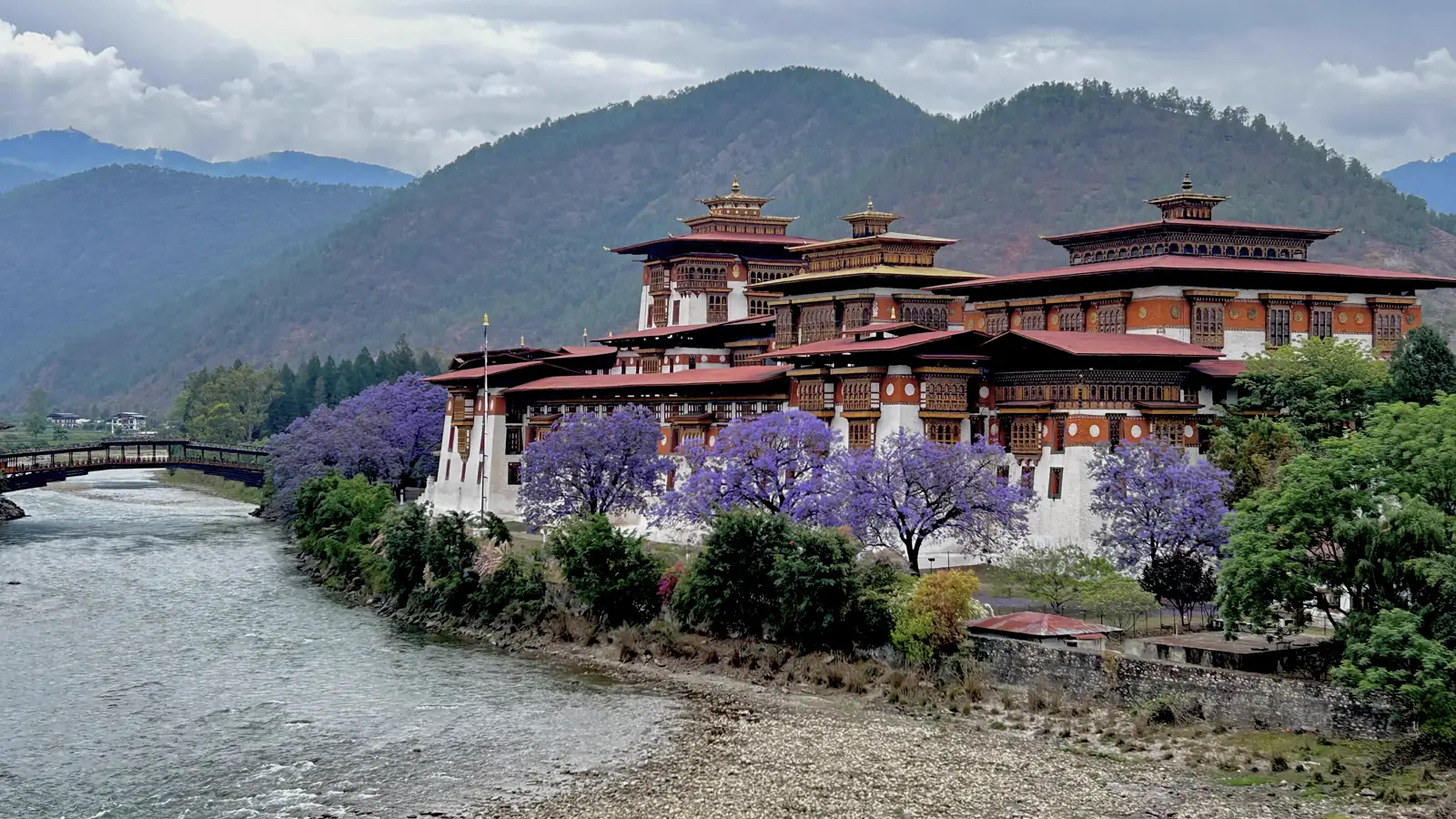
In October that choice is visible. While the rest of the region fills up after the rains, Bhutan stays measured. You hike Tiger's Nest with breathing room. You sit in a Punakha guesthouse in the evening without a tour bus parked outside. The fee is real money, and we are upfront about it, but it is also the reason the thing you came for still exists.
Tiger's Nest in October Light
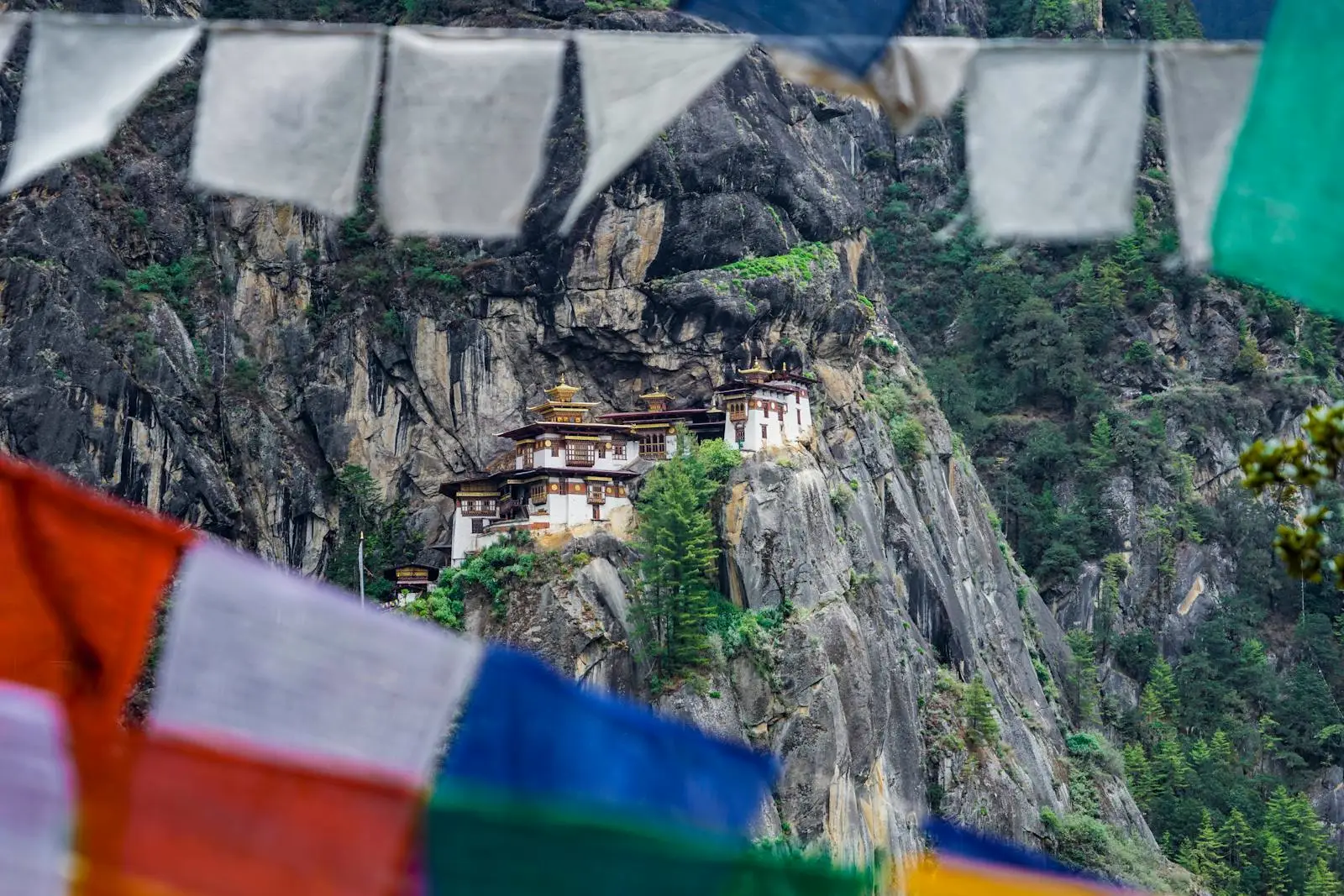
Paro Taktsang, the Tiger's Nest, is the image that brings most people to Bhutan, and October is the best month to walk up to it. The hike from the valley floor takes around three hours and climbs roughly 400 to 500 metres over about four kilometres, with chains on the steepest sections and one demoralising dip into a gorge near the very end. In October the trail is dry and the morning air is cold enough that the climb feels good rather than punishing.
Arrive at the trailhead by 7:30 in the morning. There are two reasons. The first is shade: the early part of the climb faces east, and starting early keeps you out of direct sun on the exposed switchbacks. The second is people. The monastery opens at 8, and the first hour before the day groups arrive is when you can actually hear the prayer wheels and the butter lamps instead of other visitors. From the monastery wall, looking back down the Paro valley in clear autumn light, you understand why this hike is worth the early alarm.
“We left the guesthouse in the dark and were on the trail at first light. By the time the crowds started up, we were already coming down. That hour at the top, almost alone, is the whole trip in one memory.”
— A ClearEast traveller, Paro, October 2025
The Cranes Return to Phobjikha
There is a reason October flows so naturally into a longer Bhutan trip, and it lives in the Phobjikha valley. Every autumn, black-necked cranes migrate down from the Tibetan plateau to winter in this wide glacial bowl, and they begin arriving from October. Around 300 of them spend the season here. The valley treats their return as an event: the Black-necked Crane Festival is held on 11 November each year in the courtyard of Gangtey Goempa, the monastery that looks out over the wetland where the birds roost.
If your dates run into early November, this is worth building the trip around. Even outside the festival, an October morning in Phobjikha, walking the nature trail below the monastery while the first cranes feed in the marsh, is the kind of quiet, specific experience that Bhutan does better than almost anywhere. The valley has no high-rise anything. The light comes up slowly over the ridge, and the birds are simply there, getting on with their winter.
Pack for Two Seasons in One Day
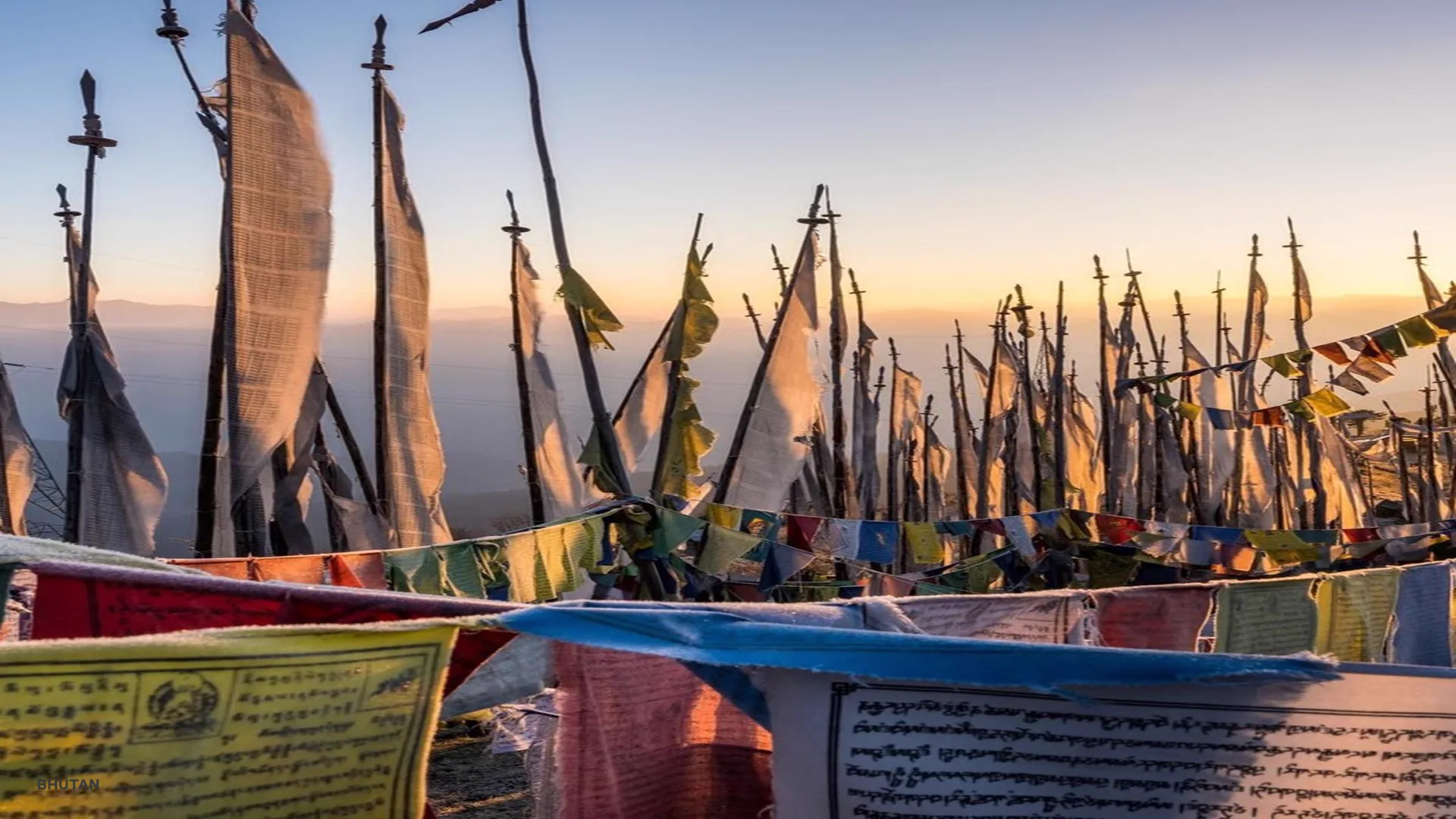
October days are mild and the sun has real warmth at altitude, but the nights are cold, colder than people expect from photos of bright autumn afternoons. In Thimphu and Paro, both above 2,200 metres, evening temperatures drop quickly once the sun is behind the ridge, and higher valleys like Phobjikha are colder still. Layers are the answer: a warm jacket for mornings and evenings, lighter clothing for the middle of the day, and proper shoes for the Tiger's Nest climb. A refillable water bottle matters more than it sounds, because the dry air dehydrates you faster than you notice.
Getting In, and When to Book
For Indian nationals, entry is straightforward: you need a passport or a Voter ID card, not a visa. You can fly into Paro, whose approach between the hills is one of the more memorable landings in the region, or cross by land at Phuentsholing on the Indian border and drive up. We handle the SDF, the permits, and the routing either way, so the admin is not something you carry.
The one thing we cannot manufacture is space in October. Because it is the clearest month, it is also the most requested, and the better guesthouses and guides are spoken for early. We turn people away in September who decided too late. If October is when you want to see Bhutan at its best, the honest advice is to start the conversation months ahead, not weeks. Tell us your rough dates and how long you have, and we will tell you straight whether we can still do it well.
Common Questions
Why is October the best month to visit Bhutan?
The monsoon clears by late September, and for a few weeks the air over the high passes is as clean as it gets all year. Days are crisp and bright, afternoons mild, and the rain that shapes so much of the Bhutanese calendar mostly stays away, which matters in a country where almost everything worth doing happens outdoors.
How much is Bhutan's Sustainable Development Fee for Indian nationals?
₹1,200 per person per night, fixed until 31 August 2027. Children aged 6 to 11 pay ₹600, and anyone under 6 pays nothing. This is separate from hotel, food, guide, and transport costs.
Do Indians need a visa for Bhutan?
No visa is needed, but an entry permit is required, processed at Bhutan Immigration with a passport or Voter ID (the original, not a photocopy).
What time should I start the Tiger's Nest hike?
By 7:30am. The early part of the climb faces east, so starting early keeps you out of direct sun, and the monastery opens at 8, meaning the first hour before day groups arrive is when the site is quietest.
When do the black-necked cranes arrive in Phobjikha?
From October, migrating down from the Tibetan plateau for the winter, with around 300 spending the season in the valley. The Black-necked Crane Festival is held on 11 November each year at Gangtey Goempa.
Bookable journey
Bhutan Highlights
5 Nights · 6 Days · from ₹38,500 per person
Travel here
Plan your Bhutan journey
Land of the Thunder Dragon
Published
June 26, 2026
Most journeys begin with a
10-minute conversation.
Tell us where you want to go, when, and who is coming. We handle everything from there.
Start the Conversation →ClearEast Trip
Typically replies within a few hours