Sikkim Without the Crowds: 8 Places Nobody Tells You About
Beyond Gangtok and Tsomgo Lake, there is a Sikkim most itineraries miss entirely
Most Sikkim itineraries follow the same circuit: Gangtok for two nights, Tsomgo Lake on day three, Baba Mandir, then back to Bagdogra. It is a good introduction to the state. It is not Sikkim.
Most Sikkim itineraries follow the same circuit: Gangtok for two nights, Tsomgo Lake on the third morning, Baba Mandir, then back down to Bagdogra. It is a good introduction to the state. It is not Sikkim. The state has four districts, dozens of villages, and several places that will stay with you long after you have forgotten the souvenir shops on MG Marg. Here are eight of them.
1. Yuksom: Where Sikkim Began
In 1642, three lamas traveled from Tibet and met on a hillside in what is now West Sikkim. They crowned Phuntsog Namgyal the first Chogyal of Sikkim at a site called Norbugang, pressing him into a throne built of stones. That throne, the Norbugang Chorten, still stands in a grove of pine trees in Yuksom. You can walk to it in ten minutes from the main road.
Most people who come to Yuksom are here to begin the Kanchenjunga trek: this is the trailhead. But even if you have no intention of lacing up boots, Yuksom is worth a night. Dubdi Monastery, built in 1701, sits above the town on a small hill, fifteen minutes' walk from the market. It is the oldest monastery in Sikkim. On a clear morning you can see the Kanchenjunga range from the courtyard. Very few people are there when you arrive.
2. Khecheopalri Lake
The sacred lake in West Sikkim that Buddhists and Hindus both visit, at 1,700 metres above sea level. Its name translates roughly as 'the heaven of Padmasambhava,' and it has been a place of pilgrimage for centuries. The detail that tends to stick: birds are said to pick up any leaf that falls onto the surface before it drifts. We have been there in autumn. The water is very still, a deep pine-fringed green. Whatever is behind the legend, the lake stays clear.
Khecheopalri sits about 25 kilometres from Pelling, a short diversion that most packages skip because there is no hotel at the lake and it does not fit neatly into the schedule. It is a half-day trip, no more, and one of the quieter places in the state.
3. Temi Tea Estate
Sikkim produces commercial tea from exactly one estate. Temi, in the South district, covers 177 hectares on a hillside between Ravangla and Namchi, rising from 1,200 to 2,100 metres. It was established in 1969 by Palden Thondup Namgyal, the last king of Sikkim, and operates today under organic certification recognised in Switzerland and Japan. The tea is sold across Europe. Most people in India have never heard of it.
Getting there is simple: the road from Ravangla to Namchi runs directly through the estate. There is a small guest cottage, sometimes bookable for overnight stays, and the factory does informal tours during harvest season. On a clear day, Kanchenjunga is visible from the upper rows. Walk slowly through it. Order tea. This is the right place for it.
4. Zuluk and the Old Silk Route
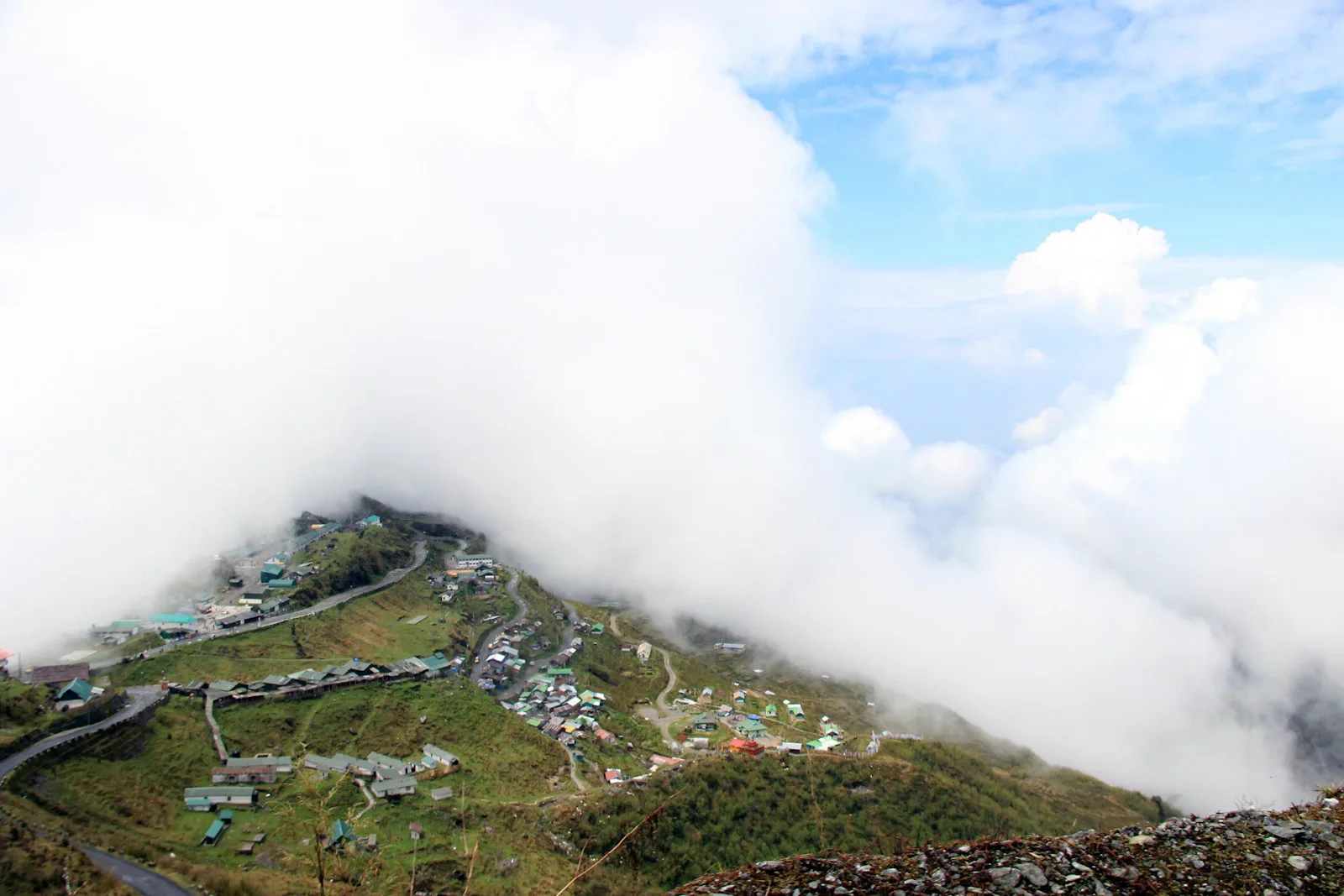
Before the Nathu La Pass route to Tibet was sealed, trade moved through East Sikkim on a mountain track that climbed through forest and high grassland. Zuluk is a small hamlet at 9,400 feet on that old route. Above it, the road climbs through 32 switchbacks in a pattern visible all at once from the Thambi View Point, at around 11,200 feet: the same road, looped back on itself, fold after fold, with snow peaks behind it on clear days.
The Silk Route circuit runs from Gangtok through Rongli, Zuluk, and Nathang Valley: three to four days, basic homestays, SUVs mandatory. Few standard packages include it because the accommodation is simple and the roads demand experienced drivers. Those are the same reasons to go. In October and November, before the snow closes the higher sections, it is one of the finest drives in the Northeast.
5. Ravangla
South Sikkim's small hill town sits at around 2,100 metres and sees a fraction of the visitors that Gangtok does. The Tathagata Tsal Buddha Park draws most of the day-trippers who stop here, and it is worth the thirty minutes to walk around the large gilded statue and the surrounding gardens. But Ravangla is more useful as a base than a stopping point.
The Maenam Wildlife Sanctuary begins just above the town. The trail climbs through temperate oak and rhododendron forest, and in spring the upper sections are in full bloom. In October the forest is clear and the views extend back toward Kanchenjunga. No North Sikkim permit is required here. You can walk in without arranging anything in advance, which in Sikkim is almost unusual.
6. Lachung Village Itself
North Sikkim itineraries send you to Lachung at night: arrive late, eat, sleep, leave at 6 AM for Yumthang Valley. The valley gets all the attention. The village gets none.
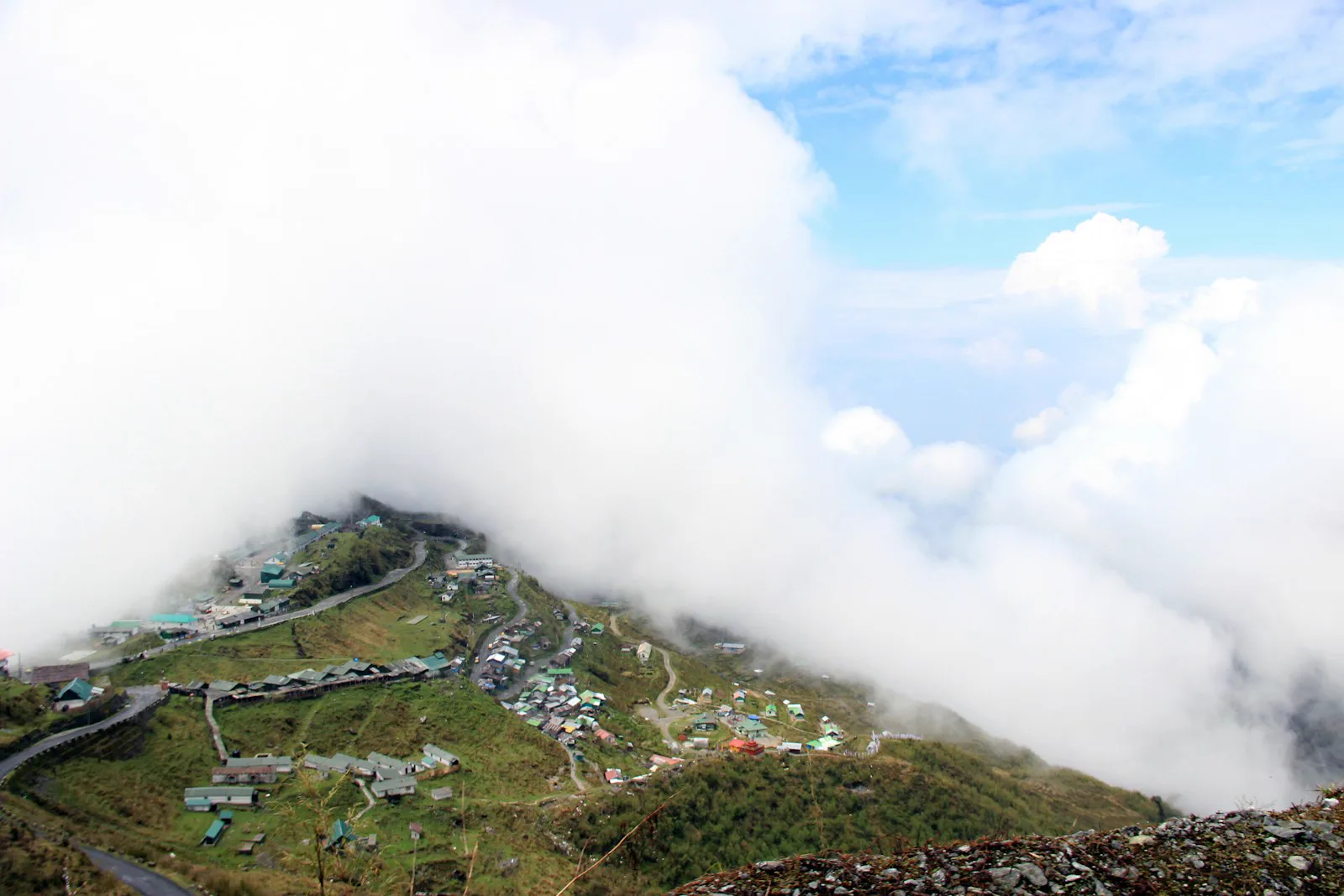
Stay for a morning before driving up. Lachung is built on a steep hillside above the Teesta River, with traditional wooden houses stacked along the slope and a small monastery above the town. The community has run its affairs through a traditional governance system called the Dzumsa for generations. In the hour before the jeeps leave for Yumthang, when the morning fog sits in the valley below and the monastery bells carry across, Lachung is one of the most affecting places in North Sikkim. Most people see it from a moving vehicle.
7. Pemayangste Monastery
One of the oldest and most significant Nyingmapa monasteries in Sikkim, built in the 17th century on a ridge above Pelling. Most visitors see it from the road below and keep going. The reason to go in is on the top floor: a seven-story wooden construction called the Zangdog Palri, the heavenly abode of Padmasambhava, built over many years by the late head lama of the monastery. It is painted and detailed in a way that is unlike anything else in the region.
Pemayangste is a thirty-minute drive from Pelling. Combined with Yuksom and Khecheopalri, it gives you a West Sikkim itinerary that has nothing to do with Gangtok, nothing to do with Tsomgo Lake, and nothing in common with the standard Sikkim package.
8. Nathang Valley in October
Above Zuluk on the Old Silk Route, the road climbs out of the tree line and into open grassland. Nathang Valley sits above 12,000 feet, wide and exposed in a way that makes the sky feel larger than it does anywhere lower. There are a handful of guesthouses and a small monastery. In October, before the first serious snow arrives, the valley turns gold and the light goes long in the late afternoon.
From November the road above Nathang can close with snow, so October is a narrow window. It is also when the valley is most itself: cold enough to make a wool layer necessary in the morning, clear enough to see far, quiet enough that you notice you are the only people there.
“We stopped at Nathang on the way back from Zuluk. The guesthouse was a single room with a wood fire. We had dinner early and were in bed by eight. I cannot explain why that evening felt so complete.”
— A ClearEast traveller, East Sikkim, October 2024
How to Plan This
None of these eight places require any special logistics, except North Sikkim permits (which apply to Lachung and anything above it). West Sikkim (Yuksom, Khecheopalri, Pemayangste) and South Sikkim (Temi, Ravangla) are open to all Indian visitors without permits. The Old Silk Route (Zuluk, Nathang) requires a Restricted Area Permit for East Sikkim, arranged through a registered tour operator.
The standard Gangtok package can be extended by two or three nights to include West or South Sikkim, or the Silk Route circuit can replace the standard East Sikkim day trip to Tsomgo entirely. If you have a week in Sikkim and want to spend it differently, we can build something around these places. The WhatsApp number is below.
Common Questions
Do I need a permit to visit the Old Silk Route or Zuluk?
Yes. The Old Silk Route (Zuluk, Nathang Valley) requires a Restricted Area Permit for East Sikkim, arranged through a registered tour operator. West Sikkim (Yuksom, Khecheopalri) and South Sikkim (Temi, Ravangla) are open to Indian visitors without any permit.
What is Yuksom known for?
It's where Sikkim began: in 1642, three lamas crowned Phuntsog Namgyal the first Chogyal of Sikkim at Norbugang, on a throne of stones that still stands. It's also the trailhead for the Kanchenjunga trek, and home to Dubdi Monastery, built in 1701, the oldest in the state.
Where does Sikkim's tea come from?
Temi Tea Estate in South Sikkim, the state's only commercial tea estate, 177 hectares between Ravangla and Namchi. It was established in 1969 by Palden Thondup Namgyal, the last king of Sikkim, and operates under organic certification recognised in Switzerland and Japan.
When is the best time to visit Nathang Valley?
October, before the first serious snow. From November the road above Nathang can close with snow. In October the high-altitude grassland above 12,000 feet turns gold and stays clear enough to see far.
How far is Khecheopalri Lake from Pelling?
About 25 kilometres, a half-day trip. Most standard packages skip it because there's no hotel at the lake itself, which is exactly why it stays quiet.
Bookable journey
Sikkim Complete Experience
6 Nights · 7 Days · from ₹19,000 per person
Travel here
Plan your Sikkim journey
North Sikkim and the Old Silk Route
Published
June 26, 2026
Most journeys begin with a
10-minute conversation.
Tell us where you want to go, when, and who is coming. We handle everything from there.
Start the Conversation →ClearEast Trip
Typically replies within a few hours